Generate leads that become real opportunities

Attract the right prospects, gauge their maturity and hand sales reps leads they can truly work.

Talk to an expert See the case study
HubSpot Elite Partner
800+ clients supported
10+ years of HubSpot expertise
Challenges

You pay for every lead.
Work every one of them.

A B2B lead generation strategy performs when it attracts the right people, spots maturity signals and hands sales reps prospects they can truly work. The hard part is not just acquisition: it often lies in targeting quality, data reliability, response time and the very definition of a qualified lead.

business processes

Lead volume sometimes hides low commercial value

A high number of leads can make campaigns look successful while few contacts actually become opportunities. When targeting stays too broad, forms attract out-of-market profiles, companies with no project or contacts with no decision-making power.

Cost per lead then looks fine, but cost per opportunity keeps rising. Performance must therefore be measured all the way to meetings, opportunities and revenue generated, not just to the number of contacts collected.


Our view

A cheap lead is not necessarily a good lead. We recommend steering first on cost per MQL, per SQL and per opportunity. These KPIs give a truer reading of marketing's real contribution to the sales pipeline.

data

Fuzzy qualification weakens the bond between marketing and sales

Marketing and sales do not always use the same criteria to recognize a qualified prospect. A download, an event registration or several visits may be read as maturity signals by marketing, while sales reps expect an explicit need, a timeline or a budget.

This gap in reading reduces trust in the leads handed over and makes reports hard to use.
A shared definition of MQLs and SQLs clarifies responsibilities and lets you analyze conversions at each stage.


Our position

Qualification must not be imposed by a single team. It must be built from marketing data, sales feedback and the traits of customers actually won. Without this cross-check, scoring stays theoretical.

team alignment

A sales signal loses value fast

A prospect who views several strategic pages, attends an event or keeps coming back to the website shows an interest that must be caught at the right time. When this information stays invisible or assignment takes several days, the company lets a workable intent go cold.

Workflows, alerts and assignment rules trigger the right action for each maturity level. Not every lead needs an immediate callback, but no priority signal should go unhandled.


What we see

The main obstacle is not always a lack of leads, but the delay between the signal and the action. The best-performing companies clearly define which behaviors trigger an alert, a nurturing track or a sales handoff.

CRM implementation

Fragile data limits qualification quality

Lead generation relies on data that can identify prospects, their companies, their behavior and their history. When this information is incomplete, outdated or scattered, scoring loses precision and teams get only a partial view of the journey.

Duplicates, free-text fields and poorly filled sources also complicate campaign attribution. Structured CRM data improves segmentation, content personalization, recognition of priority accounts and measurement of each channel's real contribution.


Our recommendation

Before adding new campaigns or predictive scoring, check the quality of the data available. Artificial intelligence and automation improve a reliable model; they do not automatically fix a poorly structured database.

B2B lead generation: how do you attract truly qualified prospects?

B2B lead generation covers the actions that attract targeted companies, identify the right decision-makers, assess their maturity and guide them until they become sales opportunities. At Copernic, a HubSpot Elite Partner consulting firm, we build this setup around acquisition, qualification, CRM data and marketing and sales alignment.

The goal is not to collect more contacts, but to generate prospects who truly match the target market and have identifiable sales potential. Qualification usually crosses two dimensions: how well the prospect fits the target and the interest signals observed throughout their journey.

A Marketing Qualified Lead, or MQL, is a contact marketing considers relevant and engaged enough. A Sales Qualified Lead, or SQL, is a prospect whose maturity justifies a sales handoff. These criteria must be shared, documented and adjusted based on results.

  Multichannel acquisition
  MQL and SQL qualification
  Centralized CRM data
  Conversion into opportunities
01

Target

ICP and decision-makers

02

Acquisition

Channels and content

03

Lead

Centralized data

04

MQL

Profile and engagement

05

SQL

Sales maturity

06

Opportunity

Identified potential

07

Conversion

Pipeline and revenue

A lead costs money. Work it fast.

A high volume of contacts guarantees neither pipeline quality nor revenue growth. An audit analyzes your acquisition sources, qualification criteria, nurturing scenarios, assignment rules and conversion rates all the way to the customer.

Our vision

A campaign attracts.
A system converts.

Generating more leads is not enough to grow revenue. A high-performing strategy rests on three complementary pillars: a clear business vision, a CRM able to orchestrate journeys and data reliable enough to qualify prospects at the right time. This is the approach Copernic has rolled out for 10+ years with B2B companies across many industries.

Lead nurturing automation

Consulting before tools


A high-performing lead generation strategy starts with organizational choices.
We help teams define their target, their qualification criteria, their MQL/SQL model and the KPIs that will measure marketing's contribution to revenue.
Tools then support this strategy, never replace it.

HubSpot data model

HubSpot expertise that drives performance


HubSpot centralizes acquisition, CRM, lead scoring, marketing automation, reporting and now artificial intelligence on a single platform. As a HubSpot Elite Partner consulting firm, we configure these features to meet concrete business goals: qualify faster, prioritize better for sales reps and improve conversion rates.

HubSpot sales data

Data as the engine of qualification


Reliable scoring depends directly on the quality of the data available. We structure CRM properties, acquisition sources, governance rules and dashboards so every decision rests on usable data.
Reliable data improves personalization, segmentation, reporting and performance analysis.

Our method

Before investing, we calculate.
After, we prove.

Building a high-performing B2B lead generation strategy does not mean rolling out new campaigns or new tools right away. We start by understanding your organization, sales cycle and goals to build a setup able to feed your sales pipeline for the long term.

01

Understand · Think

Audit the current setup

We analyze your acquisition strategy, conversion journeys, CRM, qualification criteria and performance KPIs. This audit identifies the main obstacles to generating qualified leads and sets the improvement priorities.

02

Model · Think

Structure the setup

We build a qualification model shared by marketing and sales: MQL and SQL definitions, lead scoring, segmentation, nurturing, data governance and dashboards. Every rule is designed to be simple, measurable and scalable.

03

Implement · Build

Roll out the setup

We configure HubSpot, workflows, campaigns, automations and reporting to industrialize your lead generation. Teams get a consistent process, able to identify priority prospects and personalize their follow-up.

04

Steer · Run

Optimize for the long term

We analyze results, conversion rates and each channel's contribution to revenue. This steering lets you gradually adjust campaigns, scoring and automations to improve performance for the long term.

Approach & method

Six levers.
Acquisition that pays off.

Copernic structures lead generation around six complementary levers: targeting, acquisition, qualification, scoring, nurturing and steering. The goal is not to pile up tools or campaigns, but to build a coherent system able to attract the right companies, identify their maturity and steer each prospect toward the most relevant action.

Define precisely which companies and decision-makers to target

Effective acquisition starts with a clear definition of the Ideal Customer Profile, or ICP: the company profile with the highest potential. This definition can include industry, size, revenue, digital maturity, sales organization, tools used or sales cycle complexity.

We complete this approach by identifying the functions involved in the decision: executive management, marketing, sales, customer service, data or IT. This mapping avoids producing a generic message that answers no one's expectations precisely.

Our recommendation: before increasing advertising or editorial spend, test your ICP against your truly profitable customers, won opportunities and loss reasons. A theoretical target not validated by sales data rarely produces lasting acquisition.

Build consistent multichannel acquisition

B2B lead generation can combine SEO, expert content, events, paid campaigns, outbound prospecting, social media, partnerships and Account Based Marketing strategies. Performance does not come from piling up channels, though, but from aligning them around the same target and the same value proposition.

Copernic helps connect each channel to the stages of the buying journey. Educational content can create first engagement, a webinar can deepen the need, then a nurturing campaign can prepare the sales conversation. This continuity improves conversion while avoiding disconnected messages.

Our recommendation: give each channel a precise role. Some create demand, others capture existing intent, reactivate a database or speed up a decision. Comparing them only on cost per lead leads to incomplete trade-offs.

Formalize MQL and SQL qualification criteria

Qualification must rest on explicit, understandable and shared criteria. An MQL can be defined by fit with the target, engagement level and the presence of priority signals. Moving to SQL must then match stronger sales conditions: an identified need, the right contact, a timeline, budget capacity or agreement to talk.

Copernic runs this work jointly with marketing and sales. We define CRM properties, handoff rules, rejection reasons and the mechanisms that send leads back to nurturing. The process becomes measurable and improvable.

Our position: a single download is usually not enough to qualify a prospect. Qualification must cross the company profile, observed behavior and the information gathered by teams.

Roll out lead scoring that helps your teams

Lead scoring assigns prospects a score based on their profile and behavior. It can include positive criteria, such as a decision-making role or a visit to a strategic page, but also negative criteria, such as a personal email address, an off-target company or a long period of inactivity.

Copernic favors readable, scalable models. The score must help make a decision: hand off to sales, trigger an alert, enroll in nurturing or keep the contact in a marketing audience. A sophisticated score that users do not understand quickly loses its operational value.

Our recommendation: start with a limited number of criteria directly tied to observed conversions. Then analyze false positives and ignored leads before adding new rules or a predictive layer.

Guide prospects with targeted nurturing

Lead nurturing means maintaining a useful relationship with prospects who match the target but are not yet ready for a sales conversation. Scenarios can vary by industry, role, topic of interest, maturity or previous interactions.

Copernic designs journeys that alternate educational content, case studies, invitations, comparisons and expert insights. The goal is not to send more emails, but to deepen understanding of the need and detect behavior changes that signal stronger maturity.

Our recommendation: set clear exit criteria. A contact who becomes a customer, changes topic of interest, shows sales intent or goes inactive should not keep mechanically receiving the same journey.

Connect leads to opportunities and revenue

Steering must not stop at the number of leads or a landing page's conversion rate. A high-performing strategy measures the full progression: visitor, lead, MQL, SQL, opportunity, customer and revenue generated. This view lets you calculate the cost per stage and compare the real quality of sources.

Copernic structures the properties, campaigns, CRM associations and dashboards this analysis requires. Marketing and sales leaders can then identify the channels that produce the most pipeline, the segments that convert and the friction points that slow conversion.

Our recommendation: keep a shared view of the funnel, but segment results by channel, market, offer and customer type. An overall average can hide major differences in profitability and sales cycle.

Camille, HubSpot project manager at Copernic
Stop counting your leads.
Count what they bring in.
Camille · HubSpot project manager
Case study

How Effy industrialized its lead generation with marketing automation

Renewable energy Marketing automation Lead nurturing
Effy logo

Industrialize lead generation without losing quality.

Effy wanted to support strong growth in acquisition while improving prospect qualification and handoff to sales teams. The goal was to build a setup able to move each contact forward based on its maturity, with minimal manual work.

See the Effy case study →

Turn every lead into an opportunity at the right time.

Context

The company wanted to handle a large volume of prospects while limiting manual work and improving the quality of leads passed to sales teams.

Challenge

Build an autonomous nurturing system able to qualify prospects, personalize communications and move each contact forward to the right moment for a sales handoff.

Intervention

Our teams redesigned HubSpot workflows, structured nurturing journeys, optimized qualification criteria and automated many marketing tasks to make lead handling reliable.

Results

A lead generation strategy now able to qualify prospects automatically, support their maturation and lift marketing and sales performance for the long term.

 
80
workflows optimized
 
100%
autonomous nurturing scenarios
 
+15%
lead-to-customer conversion

What clients say

Their leads are sorted.
The impact is measurable.

Operational B2B lead scoring

“Copernic helped us to set up lead scoring for our B2B prospects. Fluid communications, on-time execution, best practices shared. I recommend.”
I. DroniukHubtobee · Software and SaaS

Measurable impact within months

“We called on the Copernic agency to support the growth of our website traffic and improve the conversion of our leads. The results are very satisfying: within a few months, we can already measure the positive impact on the company's results.”
V. GambertTylto · Real estate

Expertise that generates revenue

“Copernic is helping us improve our sales funnel, generate and manage leads, and build a user community by setting up a knowledge base.”
G. SiranApoticaria · Health and wellness

Scroll →

Reviews translated from French.

Artificial intelligence

AI reads the signals.
Your sales reps stay in control.

Artificial intelligence replaces neither an acquisition strategy nor a well-structured CRM. But when it relies on reliable data and clearly defined processes, it identifies high-potential prospects faster, automates low-value tasks and makes marketing and sales interactions more relevant. The goal is not to generate more leads, but to qualify the right prospects faster and help teams focus their efforts where they create the most value.

AI for marketing production
01

Identify priority prospects

AI analyzes visitor behavior, marketing interactions, CRM data and sales history to identify the leads with the highest potential. It complements traditional lead scoring models by automatically detecting buying signals that are hard to use manually, and helps teams prioritize their actions.

02

Personalize marketing journeys

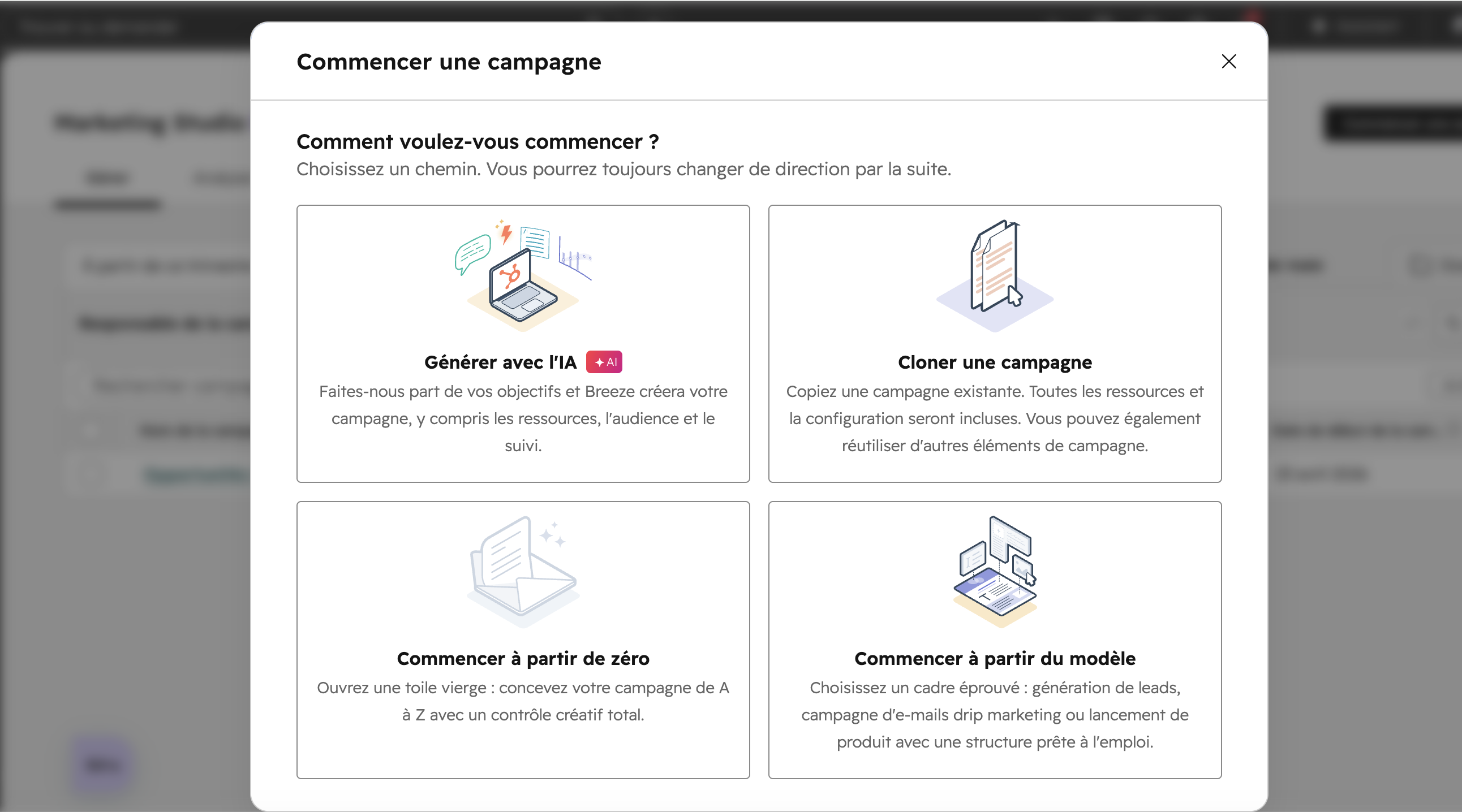
AI makes it easier to create personalized content, adapts emails, landing pages or marketing campaigns to each prospect's maturity and speeds up production. Teams can deliver more relevant messages while staying consistent with their lead generation strategy.

03

Speed up the work of
sales reps

AI assistants automatically summarize sales calls, draft follow-up emails, update the CRM and suggest next actions. Sales reps spend less time on admin tasks and more time talking to the most qualified prospects.

04

Turn sales feedback into better-performing campaigns

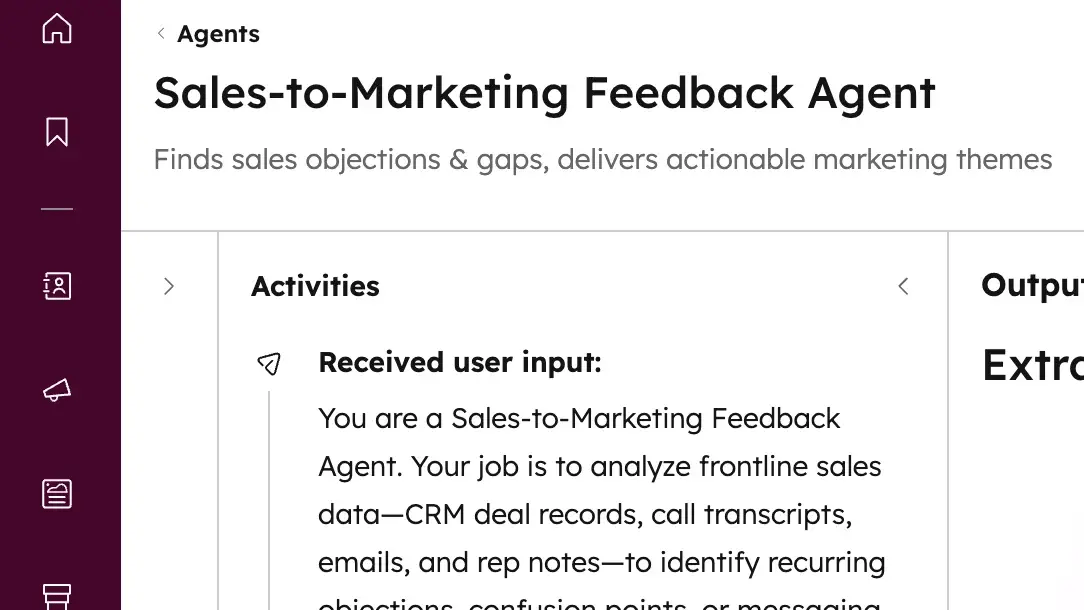
AI analyzes recurring objections, prospect questions and loss reasons to identify the topics that hold back conversion. Marketing teams get concrete recommendations to create new content, adjust their campaigns and continuously improve lead quality.

HubSpot

Your visitors leave without a word.
HubSpot spots their company.

Generating more leads is no longer enough. Companies must identify the most promising accounts, personalize interactions, automate low-value actions and measure marketing's impact on revenue precisely. HubSpot brings these capabilities together in a single platform that combines CRM, marketing automation, buyer intent data and artificial intelligence to improve lead quality at every stage of the journey.

Buyer intent

Identify the companies ready to buy

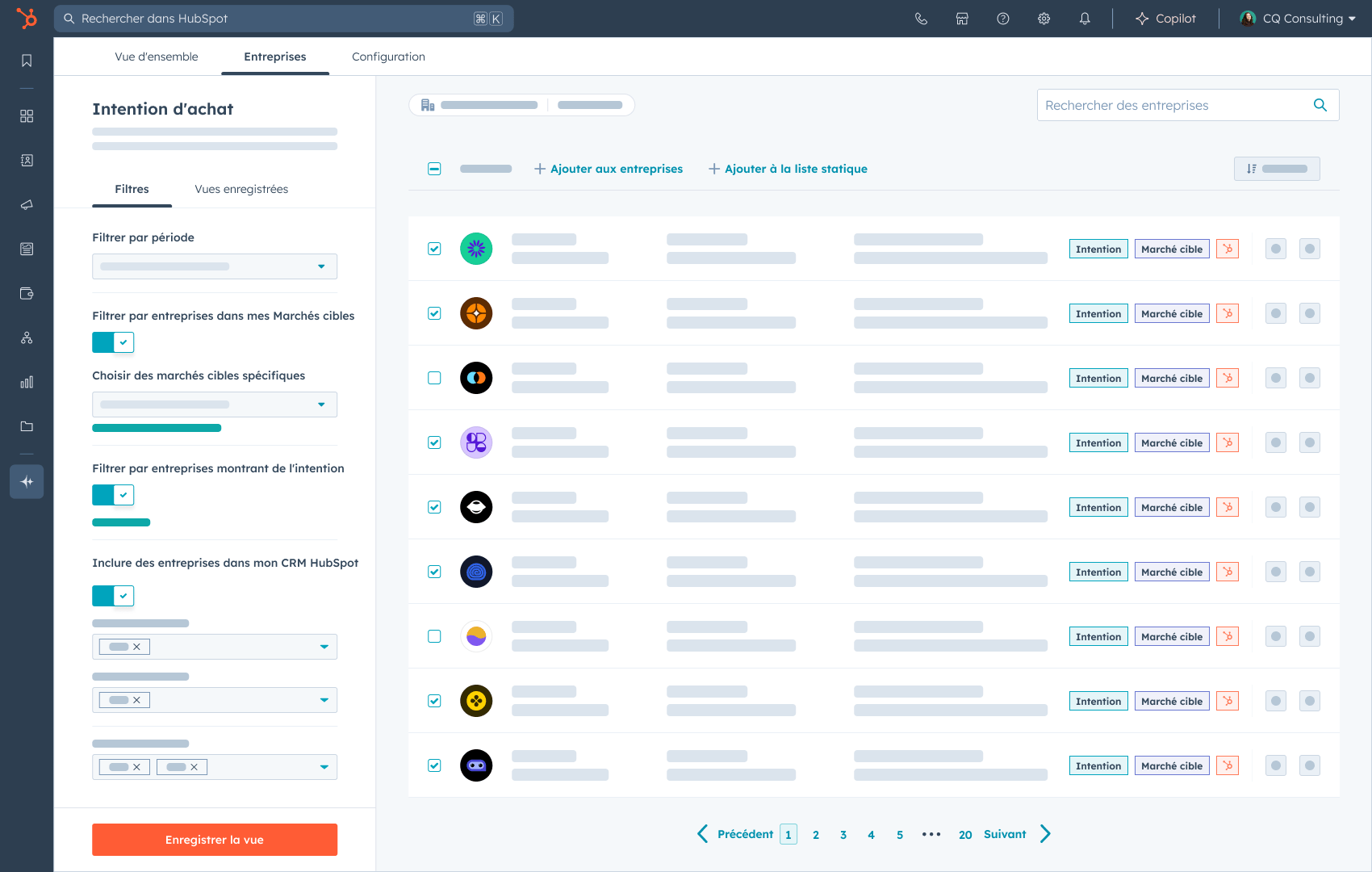
Most visitors leave a website without filling in a form. HubSpot helps detect the companies showing buyer intent by analyzing their browsing, their interactions and the market data available. Marketing and sales teams can then focus their efforts on the accounts most likely to become customers.

Relies in particular on:

HubSpot AI

Buyer Intent identifies the anonymous companies visiting your website, while Breeze Intelligence automatically enriches the information available on these accounts. Sales reps get richer context to prioritize their prospecting.

HubSpot buyer intent
HubSpot qualification
Qualification

Prioritize the best prospects

Not all leads have the same sales value. HubSpot combines CRM data, marketing interactions and business criteria to automatically prioritize the most promising prospects. Sales teams save time and focus their efforts on the opportunities with the highest potential.

Relies in particular on:

HubSpot AI

The Prospecting Agent analyzes the information available on each account, detects interest signals and prepares sales reps before they reach out. It cuts research time and makes prospecting more relevant.

Personalization

Move every prospect forward

Every prospect moves at its own pace. HubSpot automates marketing journeys to deliver the right content, at the right time, on the right channel. Campaigns adapt to prospect behavior to keep them engaged until they are handed to sales teams.

Relies in particular on:

HubSpot AI

HubSpot AI supports teams in creating personalized emails, landing pages, content and campaigns. It speeds up marketing production while keeping communication consistent with each prospect segment.

HubSpot personalization
HubSpot optimization
Optimization

Continuously improve lead quality

A high-performing lead generation strategy is always evolving. HubSpot brings marketing and sales data together to identify the campaigns that generate the best opportunities and the content that truly meets prospects' expectations. Teams share a common view to continuously improve their performance.

Relies in particular on:

HubSpot AI

The Sales to Marketing Feedback Agent automatically analyzes the objections reported by sales reps, identifies recurring obstacles to conversion and recommends to marketing teams the content or campaigns to create. Field feedback thus directly feeds the improvement of the acquisition strategy.

Copernic in numbers

They already steer.
The numbers speak.

800+clients supported
1,200HubSpot hubs implemented
130HubSpot certifications
4HubSpot accreditations

Key takeaways

Fewer contacts.
More opportunities.

Qualified lead generation means attracting the right companies, identifying decision-makers, qualifying their maturity and handing sales teams opportunities they can truly work. At Copernic, we do not try to generate more contacts: we build a system able to identify high-potential prospects and measure their real contribution to pipeline.

  • Define an ICP and the decision-makers to target
  • Attract the right prospects with multichannel acquisition
  • Qualify leads based on shared criteria
  • Guide prospects with tailored lead nurturing
  • Prioritize opportunities with lead scoring
  • Measure conversion all the way to revenue

FAQ: everything about B2B lead generation

What is B2B lead generation?

B2B lead generation covers all the actions that attract, identify and qualify companies likely to become customers. It usually combines content marketing, SEO, advertising, events, social media and sales prospecting to feed the sales pipeline with qualified prospects.

What is the difference between a lead, an MQL and an SQL?

A lead is a contact who has shown a first interest in your company. When it meets criteria set by marketing, it becomes a Marketing Qualified Lead (MQL). Once validated by sales teams, it becomes a Sales Qualified Lead (SQL) and can enter the sales pipeline. The definition of these stages must be shared by marketing and sales to ensure consistent qualification.

How do you generate more qualified leads?

Lead quality depends above all on targeting relevance, the content offered and the qualification process. A high-performing strategy usually combines several levers: SEO, paid campaigns, content marketing, marketing automation, lead scoring and alignment between marketing and sales teams.

Which KPIs should you track to measure lead generation performance?

The main KPIs are lead volume, cost per lead (CPL), visitor-to-lead conversion rate, MQL-to-SQL conversion rate, customer conversion rate, customer acquisition cost (CAC) and revenue generated by marketing campaigns. Beyond volume, lead quality remains the most decisive KPI.

Why align marketing and sales?

A lead generation strategy cannot perform if marketing and sales teams work with different criteria. Defining target profiles, qualification rules and performance KPIs together improves lead quality, reduces friction and increases conversion rates.

How does AI improve lead generation?

Artificial intelligence identifies companies showing buyer intent, automatically enriches CRM data, personalizes marketing campaigns, helps sales reps prioritize their actions and analyzes field feedback to continuously improve lead quality. It speeds up processes, but replaces neither strategy nor data governance.

Why use HubSpot to generate B2B leads?

HubSpot brings together the CRM, marketing automation, qualification tools, reporting and artificial intelligence in one platform. This approach lets you track the entire buying journey, qualify prospects better and measure marketing's contribution to business growth precisely.

Why work with a consulting firm on your lead generation strategy?

The difficulties rarely come from a lack of tools. They are often linked to targeting, the qualification model, processes or data quality. A consulting firm brings an overall view of these issues, builds a strategy suited to your goals and ensures the CRM, automations and KPIs support your growth for the long term.

Fewer lost leads. More meetings.

Opportunities often already exist. The challenge is to identify them at the right time, qualify them effectively and set up the processes that turn them into customers. Our consultants help you structure a lead generation strategy suited to your goals, optimize your CRM and make the most of HubSpot and AI.

Let's take the time to discuss your challenges and build together a lead generation strategy that truly performs.