Speed up your sales cycle for good

Shortening your sales cycle is not about asking reps to go faster. It is about removing the friction that slows opportunities down, prioritizing sales actions better and giving teams what they need to sell with more fluidity, visibility and performance.

Talk to an expert See the case study
HubSpot Elite Partner
800+ clients supported
10+ years of HubSpot expertise
Challenges

Every week of cycle has a cost.
Every clear stage cuts it.

Shortening a sales cycle does not rest on a single lever. The companies that improve their sales performance for the long term are those that gradually optimize their organization, processes and tools. After 800+ CRM projects, we see four levers that directly affect how fast opportunities convert.

business processes

Reps spend more time selling

Sales teams create more value when they can focus on their core job: understanding prospects' needs, building trust and moving opportunities forward. To get there, admin tasks must be kept to a minimum through clear processes, relevant automations and centralized data.

By cutting the time spent looking for information, writing meeting notes or updating the CRM, reps become more responsive and can handle more opportunities without a heavier workload.


What we see

Sales teams often spend as much time on immature opportunities as on high-potential deals. Without shared qualification criteria, priorities vary from one rep to the next and the pipeline loses efficiency.

data

Opportunities are prioritized by
their potential

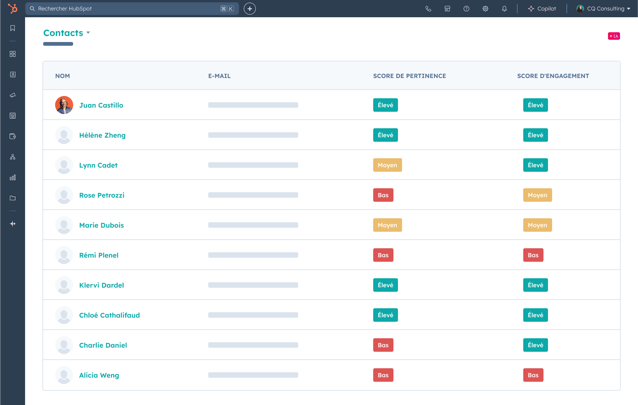
Not all opportunities share the same maturity or conversion potential. Consistent qualification, shared prioritization criteria and real-time visibility on prospect engagement let sales teams focus their efforts on the most promising deals.

This approach improves the quality of sales follow-up while keeping the pipeline moving. Opportunities progress at the right pace and resources go where they create the most value.


What we see

Many opportunities stall not because prospects have lost interest, but because no follow-up is scheduled or the next actions are not visible enough in the CRM.

team alignment

Follow-ups become regular
and consistent

Most B2B sales require several interactions before signature. Structuring follow-ups keeps a steady momentum throughout the sales journey and stops some opportunities from going untouched for days.

Harmonized processes, automatic reminders and better visibility on next actions strengthen the prospect experience while naturally shortening the sales cycle.


What we see

Many opportunities stall not because prospects have lost interest, but because no follow-up is scheduled or the next actions are not visible enough in the CRM.

CRM implementation

Managers steer opportunities with more visibility

A reliable view of the sales pipeline lets managers quickly spot the opportunities that need special support and anticipate any slowdown. With shared KPIs and quality data, decisions are made earlier and rest on objective information rather than gut feeling.

Sales management becomes more predictable, trade-offs faster, and teams share a common framework to move each opportunity forward.


Our recommendation

Speeding up a sales cycle is above all about smoothing the sales journey. When data, processes, teams and tools work together, opportunities move forward more naturally, reps become more efficient and results become more predictable.

What is a sales cycle?

The sales cycle covers all the stages between the first contact with a prospect and the signing of a contract. It includes needs qualification, sales conversations, demos, proposals, negotiation and closing. Its length varies by industry, offer complexity, the number of stakeholders involved and prospects' maturity.

At Copernic, we see the sales cycle first and foremost as a reflection of the company's sales organization. When data is reliable, processes are clearly defined and teams are aligned around a shared CRM, opportunities naturally move faster. Conversely, scattered information, irregular follow-ups or a lack of pipeline visibility slow decisions and push signature dates back.

The goal is not just to sell faster. It is to make every stage of the sales journey smoother, more predictable and more efficient, improving conversion rates, team productivity and the prospect experience at the same time.

  Sales pipeline
  Sales performance
  CRM & RevOps
  Sales management
01

First contact

Prospect identification

02

Quali­fication

Need, budget and maturity

03

Disco­very

Stakes and decision-makers

04

Demo

Value and fit

05

Pro­posal

Offer and terms

06

Nego­tiation

Trade-offs and approval

07

Signature

Closing the sale

Qualify better. Sign faster.

In 30 minutes, a Copernic diagnosis pinpoints the friction points in your sales cycle and the fastest levers to pull.

Our vision

Speed cannot be forced.
It is built.

At Copernic, we believe a shorter sales cycle is above all the result of better organization. The companies that get the best results do not ask their reps to pick up the pace. They create the conditions for opportunities to move forward naturally: reliable data, shared processes, well-configured tools and smooth collaboration between teams.

For a long time, CRM projects focused on tool features. Today, the stakes are different. Sales leaders want more visibility on their pipeline, more reliable forecasts and better team productivity. The CRM then becomes a lever for steering and continuous improvement rather than a mere data-entry tool.

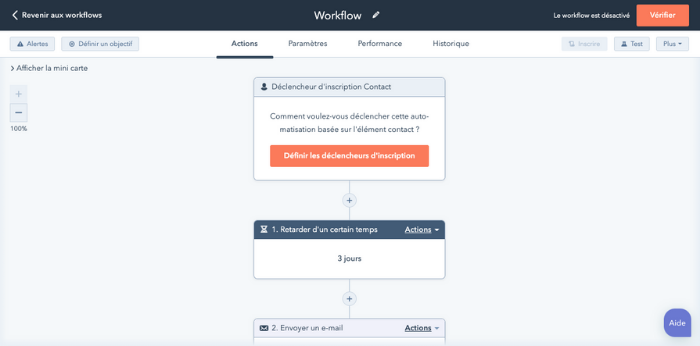
Lead nurturing automation

Organization before technology


We always start by understanding our clients' sales operations before talking tools. Goals, responsibilities, processes and KPIs are defined upfront so the CRM truly fits how the company works.

This approach builds sturdier sales organizations, able to evolve without questioning how they work every time a tool changes.

HubSpot Marketing lead scoring

A platform that supports sales teams


HubSpot offers a unified environment to centralize data, automate repetitive tasks, track opportunities and steer sales activity. Properly configured, the platform becomes real decision support for teams and managers alike.

Our role is to fit HubSpot to your organization, not the other way around.

HubSpot sales data

Reliable data speeds up every decision


Every sales decision depends on the quality of the information available. Reliable data improves qualification, makes follow-ups easier, strengthens forecasts and lets managers quickly spot the opportunities that need special attention.

At Copernic, we see data as a strategic asset. Its governance is a decisive factor in shortening a sales cycle for the long term.

Our method

Deal sizes, cycles, conversions.
Your growth, modeled.

Shortening a sales cycle for the long term is no guesswork. Every project follows a structured approach that secures decisions, involves users and delivers measurable results from the first weeks of use.

01

Understand · Think

Understand how you sell

We analyze your current processes, pipeline, CRM, data quality and management KPIs to identify the main improvement levers.

02

Model · Think

Build a model that fits your organization

We define the target processes, data model, automations and KPIs that will let teams work more smoothly.

03

Implement · Build

Configure, test and support the teams

We roll out the setup, run tests, support users and gradually adapt processes to field feedback.

04

Steer · Run

Evolve your organization over time

We analyze usage, KPIs and results to identify new performance levers over time.

Approach & method

Qualify, automate, steer.
Fewer deals that stall.

Shortening a sales cycle never rests on a single lever. A tool change or one automated task is rarely enough to transform sales performance for the long term. The companies that get the best results act on their organization, processes, data and tools at the same time.

At Copernic, we build our engagements around six complementary pillars that smooth every stage of the sales journey, improve collaboration between teams and give reps the best conditions to close their deals.

Structure a shared sales process

A high-performing sales cycle rests first on a clear process that every sales team understands and applies. Each stage must match a precise level of progress, with objective exit criteria and expected actions. This consistency makes steering easier, improves forecast quality and limits individual interpretation.

At Copernic, we help companies formalize a sales process that fits their business reality, without forcing a standard model. The goal is a framework structured enough to gain efficiency, yet flexible enough to handle the variety of sales situations.

Our recommendation: a sales pipeline should never be designed just to produce reports. It must above all guide reps in their daily actions and support their decisions.

Qualify opportunities at the right time

Not all opportunities have the same potential or maturity. Consistent qualification quickly identifies the most promising projects, prioritizes sales actions and adapts the level of support to the context.

With our clients, we define shared qualification criteria, rules for moving between pipeline stages and, where relevant, scoring mechanisms that naturally steer teams' efforts toward the opportunities most likely to close.

This approach improves both conversion rates and deal velocity.

Centralize reliable sales data

The quality of a sales cycle depends directly on the quality of the information available. When data is scattered across several tools, unevenly updated or hard to find, reps spend considerable time searching for information instead of moving their opportunities forward.

We help companies structure their data model so every interaction, activity and useful piece of information is accessible at the right time. Reliable data improves not only operational efficiency, but also the quality of sales management.

What we see: companies that speed up their sales for the long term do not necessarily have more data. Above all, they have data that is more reliable, better structured and actually used by teams.

Automate low-value tasks

Automation does not replace the work of sales reps. It lets them spend more time on the conversations that truly create value with their prospects.

Automatic task creation, follow-up reminders, lead assignment, notifications, data sync or meeting note generation: these automations reduce oversights, harmonize practices and make teams more responsive throughout the sales cycle.

Every automation is designed to simplify users' daily work, never to complicate processes.

Our view: a relevant automation is often invisible to users. When a workflow becomes more complicated than the task it replaces, it is usually time to rethink it.

Give managers the means to steer

Speeding up a sales cycle means quickly identifying the opportunities that are slowing down, the stages where blockers pile up or the teams that need special support. That is only possible if KPIs are reliable and shared.

We build dashboards to track the main sales KPIs: average sales cycle length, stage-to-stage conversion rates, opportunity volume per rep, revenue forecasts and time spent in each pipeline stage.

Steering becomes more proactive and decisions rest on objective data.

Support teams for the long term

The success of a CRM project does not depend only on the quality of what is rolled out. It depends above all on user adoption. A perfectly designed process will produce no results if sales teams do not adopt it.

That is why we pay close attention to training, change management and continuous improvement of usage. We evolve the tools based on field feedback so the CRM remains real support for sales performance, not an admin burden.

Our recommendation: a sales cycle does not improve for the long term when a CRM is rolled out. It improves through continuous improvement that evolves processes, data and usage at the company's pace.

Baptiste Collignon, HubSpot project manager at Copernic
A shorter cycle.
A quarter gained.
Baptiste Collignon · HubSpot project manager
Case study

How Orixa Media smoothed its sales cycle with HubSpot

 
Orixa Media logo
 

From a sales-only CRM to a platform that speeds up all sales performance

By migrating from Pipedrive to HubSpot, Orixa Media did not just want to change tools. The goal was to bring marketing and sales teams closer, structure a shared process and have a platform able to support the company's growth for the long term. Copernic supported the teams through the migration, upskilling and continuous optimization of their CRM to turn HubSpot into a real performance lever.

Sales process CRM migration Sales & Marketing

A platform built to speed up sales performance

Context

Orixa Media used Pipedrive to steer its sales activity. While the tool met the sales teams' needs, it limited collaboration with marketing and could no longer support the company's growth ambitions. Leadership wanted a platform able to unify usage around a shared business strategy.

Challenge

The goal was not just to migrate data to HubSpot. It was to rethink sales processes, improve collaboration between teams, ease CRM adoption and have a scalable environment able to shorten the sales cycle for the long term.

Intervention

Copernic led the migration from Pipedrive to HubSpot, ran the scoping workshops, configured the platform, supported sales and marketing teams with dedicated training, then continued its support with a continuous improvement approach to optimize processes, nurturing and CRM usage.

Result

Teams now have a single platform to steer their sales and marketing actions. Data is centralized, processes are harmonized and staff get up to speed faster thanks to training materials. HubSpot has become a steering tool that supports the company's evolution and its growth strategy.

See the Orixa Media case study →

What clients say

Their funnels are clear.
Their sales move forward.

The whole sales cycle rethought

“Brice supported us in the strategy and thinking behind our entire sales cycle. His advice and recommendations saved us precious time and helped build a long-term vision for our CRM.”
A. RouleauLox Solution B.V. · Software and SaaS

The mechanics of our business

“Mark listened closely to our constraints and fully understood the mechanics of our business and the processes behind our sales cycle. We now have a high-performing CRM to track our activity!”
O. Schall5 C developpement · Consumer services

Sales funnels configured

“We are working with Copernic, and especially Mathilde, to improve our use of HubSpot and, for now, especially to configure our sales funnels. Mathilde understands our issues well and knows how to address them by prioritizing topics.”
T. MougeotteKawalearn · Education and training

Scroll →

Reviews translated from French.

Artificial intelligence

AI does not replace your sales reps.
It saves them precious time.

Artificial intelligence alone does not shorten a sales cycle. But when built into a well-structured CRM, it lets sales teams spend more time selling and less on admin tasks. Reps become more responsive, managers get better visibility on their pipeline and decisions rest on more reliable information.

At Copernic, we favor use cases that deliver immediate time savings while improving the quality of sales follow-up.

AI for marketing production
01

Reps move on to the next opportunity faster

After each meeting, AI can automatically generate a summary, identify next actions, draft a follow-up email and save the information directly to the CRM. Reps avoid re-entry while keeping a complete, consistent history of their conversations. They can chain meetings more smoothly and spend more time with their prospects.

02

Teams focus their efforts on the most promising deals

AI analyzes sales interactions, completed activities, engagement signals and CRM data to help teams identify the opportunities that deserve priority attention. Reps get a clearer view of the actions to take and can adapt their follow-ups to each deal's maturity.

 
03

Sales conversations become a source of continuous improvement

Conversations with prospects hold a wealth of often untapped information: recurring objections, expectations, decision blockers or the arguments that work best. AI automatically identifies these trends to improve sales pitches, marketing content and sales processes. Teams keep improving from their own field interactions.

 
04

Reps get real-time support

AI makes it easier to find information, recommends relevant content, reminds reps of next actions and helps teams prepare their meetings. It becomes a real sales assistant able to quickly restore the context of an opportunity, even when several people work on the same deal.

Conversations flow better and response times shrink.

Our view

At Copernic, we see artificial intelligence as a formidable accelerator of sales performance, provided it rests on a solid organization. AI fed with incomplete data or built into loosely structured processes will reproduce the same inefficiencies as before, just faster.

That is why we always recommend building a reliable data model first, consistent sales processes and clear governance before rolling out AI use cases. Built into a coherent CRM strategy and RevOps approach, artificial intelligence becomes a real lever to shorten time to signature, improve the quality of conversations and lift sales team productivity for the long term.

HubSpot

Time saved
is revenue.

Shortening a sales cycle takes far more than a CRM. Sales teams need a platform able to centralize data, guide daily actions, automate repetitive tasks and provide a reliable view of sales performance. HubSpot brings all these capabilities together in a single environment designed to support reps throughout the sales journey. Properly configured, the platform becomes a real lever for operational efficiency and steering.

Pipeline

Steer your opportunities with more visibility

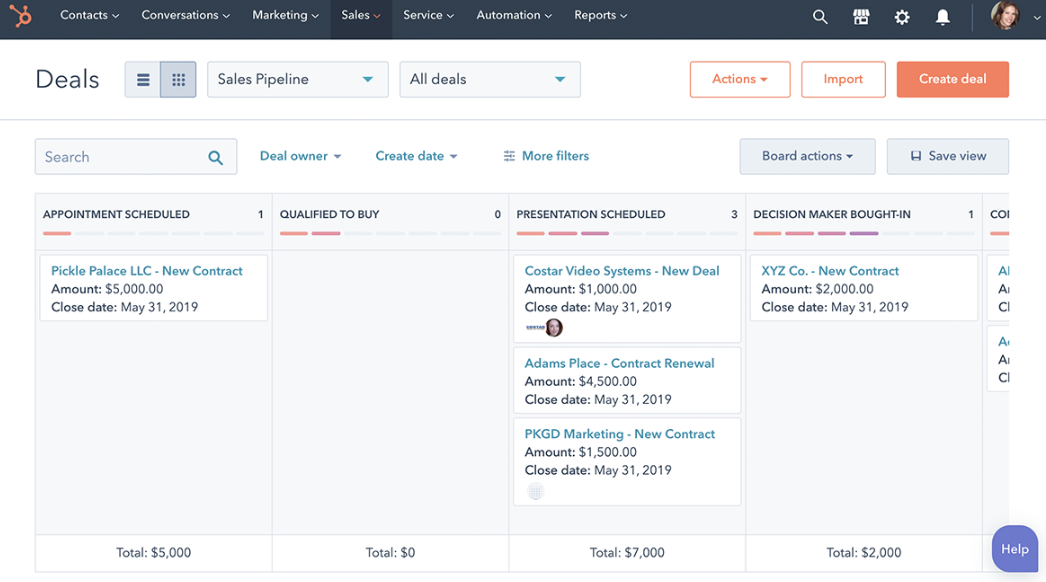
A structured pipeline lets sales teams track each opportunity's progress precisely, spot blockers and prioritize next actions. Managers get a consolidated view of activity while reps work in a shared, consistent environment.

HubSpot AI

HubSpot AI helps reps quickly summarize opportunities, find key information and prepare their next conversations without scrolling through the whole CRM history.

HubSpot pipeline
HubSpot automation
Automation

Smooth sales follow-up without piling on tasks

Automations ensure regular prospect follow-up while cutting manual work. Task creation, reminders, notifications and CRM updates harmonize practices and secure every stage of the sales cycle.

HubSpot AI

HubSpot's AI features complement automations by suggesting follow-up content, activity summaries and recommendations tailored to each opportunity's context.

Productivity

Give reps more time to sell

By centralizing emails, meetings, calls, documents and sales activities, HubSpot limits re-entry and simplifies teams' daily work. Reps have all the information they need in one place.

HubSpot AI

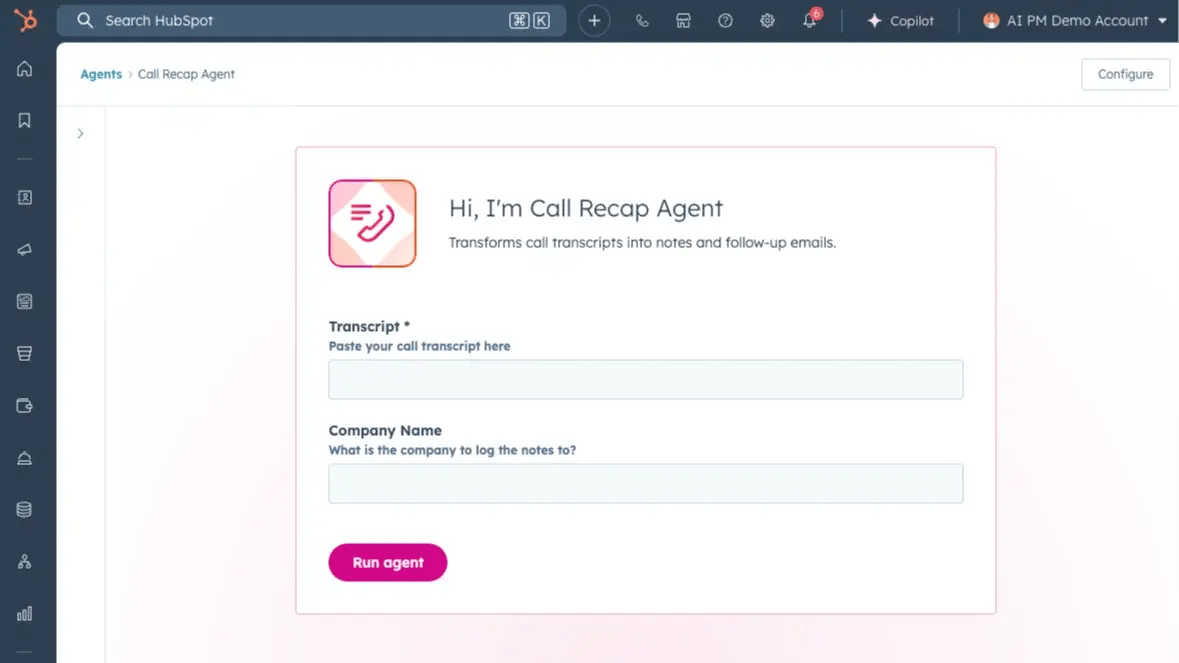
The Call Recap Agent automatically generates call summaries, suggests follow-up emails and updates the CRM to cut the time spent on admin tasks.

HubSpot productivity
HubSpot reporting
Steering

Make decisions based on reliable data

Sales performance rests on a clear view of KPIs. HubSpot tracks pipeline evolution, conversion rates, sales cycle length and revenue forecasts through custom dashboards.

HubSpot AI

Artificial intelligence makes sales performance analysis easier by highlighting trends, gaps and improvement opportunities directly from CRM data.

Copernic in numbers

10+ years of HubSpot pipelines.
Yours is not our first cycle.

Speeding up a sales cycle does not rest on a good tool alone. It takes a proven methodology, a sharp understanding of sales processes and strong change management skills. For 10+ years, Copernic has helped sales, marketing and executive leaders structure their organizations, make their data reliable and get the most out of HubSpot.

800+clients supported
1,200HubSpot hubs implemented
130HubSpot certifications
4HubSpot accreditations

Key takeaways

Less friction.
More predictability.

Speeding up your sales cycle means cutting the friction that slows opportunities, prioritizing sales actions better and smoothing every stage of the sales journey. It rests on clear processes, reliable data, a shared CRM and shared performance management.

  • Structure a shared sales pipeline
  • Qualify opportunities at the right time
  • Automate low-value tasks
  • Make sales data reliable
  • Prioritize actions by potential
  • Steer performance in real time

FAQ: your questions on sales cycle optimization

What is a sales cycle?

The sales cycle covers all the stages that take a prospect to signing a contract. It starts at first contact and ends when the opportunity is won or lost. Its length depends in particular on offer complexity, the number of decision-makers involved and the company's sales organization.

How do you speed up your sales cycle?

Speeding up a sales cycle means removing the friction that slows opportunities down. It takes clearly defined sales processes, consistent qualification, reliable data, structured follow-ups and suitable tools. The goal is not to artificially shorten sales stages, but to let teams move forward more efficiently.

What are the main levers to shorten a sales cycle?

The main levers are structuring sales processes, qualifying opportunities, automating repetitive tasks, centralizing data, steering KPIs and supporting teams. These dimensions complement each other and deliver the best results when rolled out together.

Does a CRM really speed up a sales cycle?

Yes, provided it is properly structured and adopted by teams. A CRM centralizes information, makes opportunity tracking easier, automates certain tasks and improves sales management. However, it replaces neither processes, nor governance, nor user support.

Which KPIs should you track to steer your sales cycle?

Companies usually track average sales cycle length, stage-to-stage conversion rates, the number of open opportunities, win rate, pipeline value, sales velocity and revenue forecasts. These KPIs quickly reveal blockers and improvement opportunities.

What is the difference between a sales cycle and a sales pipeline?

The sales cycle describes the path an opportunity follows from first contact to signature. The sales pipeline, for its part, represents all open opportunities, grouped by stage. The pipeline is a steering tool, while the sales cycle measures how the sales process unfolds.

How can artificial intelligence speed up the sales cycle?

Artificial intelligence automates low-value tasks, summarizes sales conversations, helps prioritize opportunities, suggests next actions and analyzes conversations with prospects. Built into a CRM like HubSpot, it lifts team productivity while strengthening the quality of sales follow-up.

Why work with a consulting firm to optimize your sales cycle?

A consulting firm brings an outside view of the sales organization, processes, data quality and CRM usage. It helps identify the main performance levers, build a realistic roadmap and support teams over time to deliver measurable results.

Your forecasts hold. So does your quarter.

Want to shorten your sales cycle, lift your teams' productivity or structure your sales organization?

For 10+ years, we have supported 800+ companies in their CRM, RevOps and HubSpot projects.