Build a CRM strategy that aligns your teams and speeds up your growth.

We turn your business goals into a clear, governed and executable CRM strategy: scoping, AMOA, processes, data, tool selection and roadmap. Our field: mid-sized companies (mid-market) and large enterprises, where several departments have to share the same CRM.

Talk to an expert See the case study
HubSpot Elite Partner
800+ clients supported
10+ years of HubSpot expertise
Scope of the expertise

Four decisions to make.
Before any configuration.

A serious CRM strategy cannot be reduced to a tool audit. It must connect the company's business model to its operating organization, then translate that organization into a data architecture and a steering framework.

CRM governance expert
01. CRM governance

Set the rules that keep the CRM consistent over time.

A CRM strategy is not just about documenting processes. It also sets responsibilities, governance rules, access rights, naming conventions and the principles that will frame future changes to the CRM. This governance is what guarantees the platform's long-term health.


What we see

CRMs rarely decay because of the tool. They decay because no governance rules were set from day one.

 Copernic team, CRM strategy experts
02. Business processes

Design journeys that are simple, consistent and shared by every team.

We analyze Marketing, Sales and Customer Service journeys to spot breaks, duplicates and steps that add no value. Each process is redesigned before it is translated into the CRM, to guarantee a smooth experience for teams and customers alike.


What we see

Companies often try to automate processes that were never truly standardized.

CRM and RevOps consultant
03. Data architecture

Build data that is reliable, usable and scalable.

We define the target data model: objects, properties, associations, reference data, naming rules and quality rules. The goal is one single version of the data, understood by everyone and able to feed both day-to-day operations and reliable CRM reporting for leadership.


What we see

CRM data only has value if everyone gives it exactly the same definition.

    Consultant specializing in CRM strategy
04. Roadmap & AMOA

Turn the strategy into an operational action plan

Once the target is set, we prioritize workstreams, make the calls on changes and support their delivery. This phase covers the requirements specification, AMOA, the possible choice of a new platform and steering its HubSpot integration through to go-live.


What we see

CRM projects rarely fail during configuration. They fail because the structuring decisions were not made before the project started.

What is a CRM strategy?

A CRM strategy is the set of decisions that organize how you manage relationships with prospects, customers and partners. It specifies the goals, the processes to standardize, the data to collect, team responsibilities and the KPIs to track.

It is neither the choice of a software package nor a configuration project. The CRM software is the environment that runs a model defined upstream. Without that work, the company risks reproducing its silos, exceptions and old habits in a newer tool.

A CRM AMOA engagement (client-side advisory) turns business team expectations into clear, prioritized and usable requirements. It creates the interface between leadership, users, IT and the teams in charge of integration.

  Vision and business goals
  Processes and responsibilities
 Data architecture and governance
 Roadmap and technology choice

Your organization has changed.
Has your CRM kept up?

A scoping call identifies the gaps between your organization, your usage and what your CRM system can really do.

Our vision

Before your CRM,
we understand your model.

The CRM shapes how the company acquires, qualifies, converts, serves and grows its customers. So we refuse to treat it as a mere software project. A solid CRM strategy must clarify the organization, make data reliable and make technology truly useful to teams, all at once.

HubSpot Revenue Hub
Consulting

Strategy & organization

Goal: align the CRM with the business model, growth priorities and the company's real responsibilities.

What we do: we run the scoping workshops, challenge the needs, settle the target processes and define the governance and a realistic roadmap.

Our conviction: without clear organizational decisions, the best software only digitizes existing disagreements.

Data Hub - Data Studio
Data

Architecture & interoperability

Goal: create data that is reliable, shared and directly usable by operational teams and leadership alike.

What we do: we design the data model, reference data, quality rules, responsibilities and flows with the rest of the information system.

Our conviction: the quality of reporting and AI depends first on the structural quality of CRM data.

AEO - categories - HubSpot
Technology

HubSpot & execution

Goal: translate the strategy into a platform that is easy to understand, scalable and truly adopted by users.

What we do: we design the setup, oversee configuration, steer acceptance testing, organize training and secure continuous improvement.

Our conviction: technology must make the target model easier to run, never dictate how the company is organized.

Our method

From diagnostic to roadmap.
Then from roadmap to real use.

01

Understand · Think

Scoping

We analyze your organization, goals and constraints to build a shared diagnostic and set the priorities that will guide the whole project.

02

Model · Think

Target design

We design a clear target by defining the processes, data model and governance rules that will structure your CRM for the long run.

03

Build · Build

Trade-offs & roadmap

We challenge functional and technical choices to prioritize workstreams, limit complexity and build a trajectory that fits your business stakes.

04

Steer · Run

AMOA & steering

We support the rollout of the recommendations, coordinate stakeholders and secure every step until the changes go live.

Approach & method

How do you make money?
That is our first question.

Our method turns an often fuzzy CRM ambition into concrete, prioritized and directly usable decisions. We start from the business model, observe real usage, challenge processes and structure the trade-offs before any configuration. The goal is not an ideal diagram. It is a realistic trajectory that business teams understand, leadership governs and project teams can execute.

Understand the business model

We link CRM expectations to the company's economic priorities: speed up acquisition, convert better, increase customer value, cut service costs or structure a multi-entity rollout. This scoping keeps every business request from turning into an isolated feature.

Our recommendation: express every CRM need as an expected business result.

Business goals
Priority segments

Map the real processes

We observe processes as users actually live them, not only as procedures describe them. We spot double entry, workarounds, breaks in ownership, needless delays and the exceptions that make the CRM more complex.

Our recommendation: always compare official procedures with real usage.

Prospect-to-customer journey
Operational pain points
Roles and handoffs

Design the target organization

We build a clear target organization: who owns each process, who is responsible for data quality, who administers the CRM and who decides on changes. This organization sets the conditions for a consistent CRM after the project ends.

Our recommendation: appoint a functional owner for the CRM.

CRM RACI
Data ownership
Governance committees

Architect the data

We design a data architecture consistent with business journeys and steering needs. Every object, property and association has a purpose, a source, an owner and an explicit management rule.

Our recommendation: no property without a purpose, a source and an owner.

Define steering

We define the decisions to inform before selecting the indicators. We then align the KPIs, their definitions, sources and refresh frequency so Marketing, Sales, Customer Service and leadership work from the same reality.

Our recommendation: a dashboard must serve a specific decision.

Performance indicators
Steering rituals

Decide what to automate

Not every task should be automated. We identify the processes stable enough to be industrialized, then define the business rules, controls and exceptions that will keep them running properly. Every automation must make the teams' work simpler, make data more reliable and stay understandable over time.

Our recommendation: an automation must always make the teams' work simpler. If it becomes more complex than the process it replaces, it will quickly create new constraints.

Use case prioritization
Business rules & exceptions

Build a roadmap

We turn the decisions made during scoping into a realistic, prioritized and shared roadmap. Each workstream is organized by business impact, dependencies and required resources to secure delivery. Keeping, evolving or replacing the tool then fits into one consistent trajectory.

Our recommendation: favor a step-by-step trajectory that delivers value to teams quickly.

Priorities and phases
Success criteria
Deliverables

Deliverables that get used.
Not reports that gather dust.

Deliverables that leadership, business teams, IT and integration teams can actually use.

Diagnostic
of the existing setup

Usage, processes, data, tools, risks and maturity.

Process mapping

Current and target journeys, responsibilities and exceptions.

Target CRM
architecture

Objects, associations, systems and flows.

Data
dictionary

Definitions, formats, sources and quality rules.

CRM governance

Roles, rights, decision-making and principles for change.

KPI framework

Indicators, formulas, sources and owners.

Requirements specification

Business, data, security and integration requirements.

Prioritized roadmap

Phases, dependencies, resources, risks and budget.

Case study

A CRM migration: the chance to bring the sales organization up to standard

Behind a change of tool there is often a real structuring project. Here is how this scoping turned into concrete results.

 
Opale Capital logo
 

Move from Salesforce to HubSpot without losing sales momentum.

A CRM migration that became the chance to make data reliable and get the sales team back in working order from week one, with no break in activity.

Finance & FinTech CRM migration HubSpot optimization

The CRM as an accelerator of sales autonomy.

Context

A finance team on Salesforce that needed to regain control fast, with no break in activity.

Challenge

Avoid any loss of sales velocity during the switchover and guarantee immediate adoption.

Intervention

Full data migration, configuration of the HubSpot ecosystem and close support for the teams.

Result

100% of users active in 7 days, and twice as much time saved on prospecting.

See the Opale Capital case study →

What clients say

They wanted a tool.
They got a method.

Sales processes restructured

“A (re)structuring of our internal sales and marketing processes. […] It comes close to management consulting (in sprints) built on modern tools.”
J. RejaudWEL · B2B services

An agency that listens first

“If you are looking for an agency that knows how to listen and understand how you work internally in order to adapt it to the CRM, you are in the right place.”
L. PinelGlinko · B2B services

Practices that deliver fast results

“Copernic gave us the tools and practices to put in place to get fast sales results. A good understanding of our challenges and a team full of ideas.”
S. RemaounSailendra · B2B services

Reviews translated from French · Scroll →

Artificial intelligence

AI is entering your CRM.
Your governance sets the rules.

CRMs are no longer just databases or sales tracking tools. They are becoming platforms that can analyze data, assist users, recommend next actions and automate certain decisions. We help our clients bring these new capabilities into their CRM strategy, making sure they rest on reliable data, controlled processes and the right governance.

AI diagram
01

Conversational CRM

Users no longer need to search for information by hand or build a complex report. AI assistants let them query the CRM in natural language, summarize the history of a relationship or instantly get the context of a contact, company or deal.

02

Predictive CRM

AI analyzes CRM data to identify priority deals, churn risks, buying intent or process anomalies. It helps teams make decisions faster, based on the data available rather than on gut feeling alone.

03

Autonomous CRM

New AI agents can carry out certain tasks on their own: enrich a CRM record, qualify a prospect, draft an email, prepare a meeting or help an advisor handle a request. The CRM is gradually moving from a management tool to a true operational assistant.

04

AI governance

How well these features work depends directly on the quality of the CRM. Structured data, harmonized processes and clear governance rules are essential to guarantee reliable recommendations and relevant automations. That is why we build these dimensions into every CRM strategy engagement.

HubSpot

Your strategy evolves.
HubSpot evolves with it.

HubSpot is no longer just a sales CRM. Today the platform lets you structure data, automate processes, steer performance and bring artificial intelligence into the heart of day-to-day work. As a HubSpot Elite Partner, we support you in designing, rolling out and evolving your CRM platform so it remains a true growth engine.

Data

Structured data for a CRM that can grow

A CRM strategy rests above all on a robust data model. HubSpot lets you structure objects, associations and properties to build a reliable source of reference data that grows with your organization without piling up custom development.

HubSpot AI

With Breeze Intelligence, HubSpot automatically enriches your CRM data and detects missing or inconsistent information to improve the quality of your database and the reliability of your analyses.

HubSpot contact management
Lead scoring
Processes

Industrialize business processes

HubSpot lets you model marketing, sales and customer service processes in a single platform. Workflows, pipelines and automations guarantee consistent execution while keeping the flexibility needed to handle special cases.

HubSpot AI

Breeze Assistant supports users right in their daily work. It answers questions using CRM context, summarizes records, prepares next actions and guides teams through processes, without leaving HubSpot.

Steering

Turn data into decisions

HubSpot consolidates all your marketing, sales and customer service data to produce reliable dashboards and shared KPIs. You steer your business from a single source of truth.

AI built into HubSpot

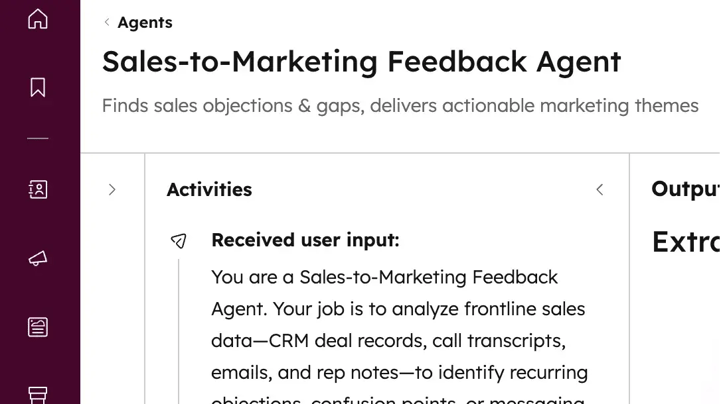
The Data Agent analyzes your CRM, identifies data anomalies, recommends corrective actions and answers your questions in natural language to speed up steering and decision-making.

Sales to marketing feedback agent
HubSpot Marketing Hub reporting
Scalability

A platform that grows with your organization

Thanks to its open architecture, HubSpot adapts as your company grows. APIs, integrations, custom objects and automations let your CRM evolve without calling its architecture into question.

HubSpot AI

With Breeze Projects and the AI agent builder, HubSpot lets you create AI experiences tailored to your own business processes. You design assistants that use your CRM data, knowledge base and business rules to support your organization as it evolves.

Why Copernic

Scoping in weeks.
A roadmap for years.

A CRM strategy engagement takes 4 to 12 weeks on average, depending on how complex your organization is. It settles the four decisions that give your CRM its direction and delivers documents that leadership, business teams, IT and integration teams can use.

Copernic is a HubSpot Elite Partner: we connect your business model, your organization and your data architecture before any configuration.

4structuring decisions settled
8deliverables for leadership, business teams and IT
4 to 12weeks for a CRM strategy engagement

Key takeaway

You can't configure an intention.
You configure decisions.

A CRM strategy defines how a company organizes its customer relationships: processes, responsibilities, data, KPIs and tools. It must come before any implementation, redesign or CRM migration project.

At Copernic, we don't start by configuring software. We start by defining what the CRM must enable teams and leadership to achieve.

  • Align Marketing, Sales, Customer Service and leadership in a shared RevOps approach
  • Design processes before automating them
  • Define a reliable data architecture
  • Clarify governance and responsibilities
  • Make the keep-or-switch tool decision objective
  • Turn the strategy into a roadmap
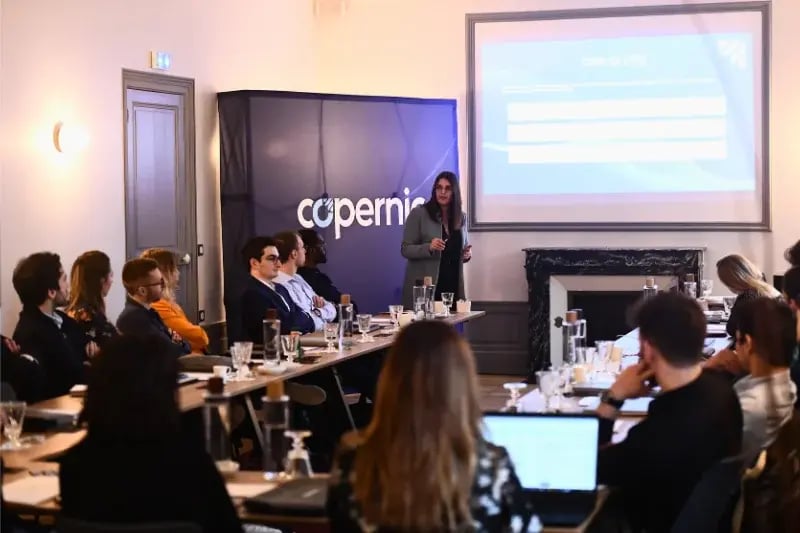
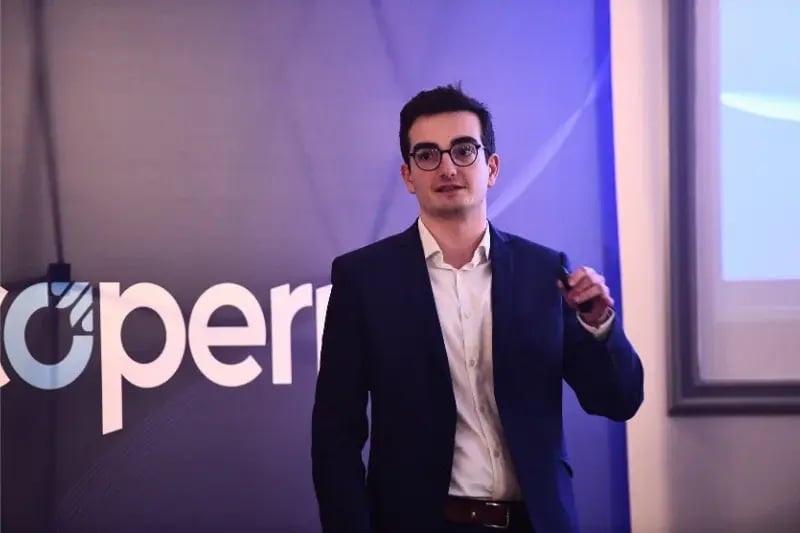
Brice Germain, junior partner at Copernic, in a client workshop
A CRM is not software.
It is your model, translated.
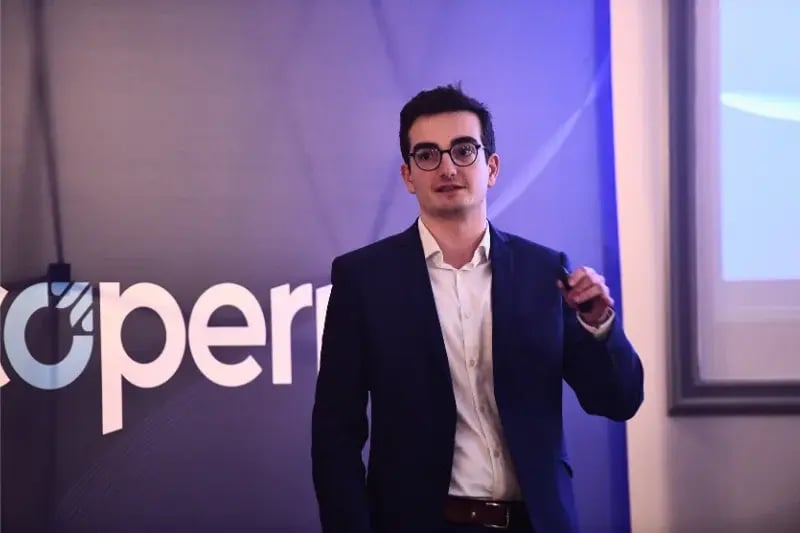
Brice Germain · junior partner, business and process expert

FAQ: CRM strategy

What is the difference between a CRM strategy and a CRM audit?

An audit assesses the existing setup. A strategy defines the target organization, processes, governance, architecture and roadmap.

How much does a CRM strategy cost?

The cost depends on how complex your organization is: number of teams and entities, processes to scope, data volume and systems to integrate. We specify it after a first conversation with an expert.

How long does a project take?

A project takes 4 to 12 weeks on average. This is a guide only: it can take longer depending on complexity.

What results can we expect?

Better conversion, higher productivity and a clearer view of your business.

Should you choose the software before the CRM strategy?

No. Choosing a CRM must be the consequence of your strategy, not its starting point. Before comparing the tools on the market, you need to define your goals, business processes, data model and KPIs. This approach lets you select a platform that truly fits your needs, rather than bending your organization to a tool's limits. At Copernic, we often step in before the platform is chosen to help clients build a requirements specification and make their decision objective.

What is CRM AMOA for?

Client-side advisory (AMOA) bridges business needs and the technical delivery of the project. It gathers user expectations, formalizes target processes, sets priorities and makes sure the platform deployed truly meets the company's goals. AMOA also eases coordination between stakeholders, limits misunderstandings and secures decisions throughout the project.

Does a CRM strategy mean changing tools?

Not necessarily. In many cases, the difficulties come more from processes, governance or data quality than from the CRM itself. A CRM strategy engagement can lead to optimizing what exists, reorganizing usage or evolving the current architecture. If the platform's limits become a barrier to your goals, the strategy then justifies a change of tool on objective, measurable criteria.

Who should take part in CRM strategy workshops?

A CRM strategy is not built with sales teams alone. Workshops usually bring together leadership, marketing, sales, customer service, operations, IT or RevOps teams, depending on the project's stakes. This cross-functional approach aligns goals, builds a shared view of processes and designs a CRM that meets the needs of every team.

What deliverables do you hand over at the end of the engagement?

Deliverables vary with the project scope, but usually include a process map, a target data model, CRM architecture recommendations, a prioritized roadmap and a functional requirements specification. Where needed, we can also produce a governance framework, detailed specifications or support for choosing the CRM platform.

Can Copernic step in before HubSpot is chosen?

Yes. Our first job is to define the CRM strategy that best fits your organization, whatever platform is chosen. We can support you in scoping the project, formalizing needs, writing a requirements specification or evaluating several CRMs. If HubSpot turns out to be the best fit, we can then run the entire project, from design to integration. This approach ensures the platform choice rests on business criteria, not just on technical or commercial considerations.

You set the strategy.
We make it executable.

In 30 minutes, we review your context, your goals and the decisions to secure: audit, strategic scoping, AMOA or roadmap.