Our manufacturing CRM services

Structure complex sales, connect HubSpot to your ERP and give your field teams, sales administration and leadership one shared view of accounts, quotes and orders.

HubSpot Elite Partner
800+ clients supported
10+ years of HubSpot expertise
Your challenges

One quote, several decision-makers.
One history.

Rolling out a CRM designed for manufacturing brings a set of benefits that go well beyond managing customer interactions. These systems add considerable value through a range of functional and strategic improvements.

Copernic puts these benefits to work to transform how manufacturers manage their customer relationships and operations.

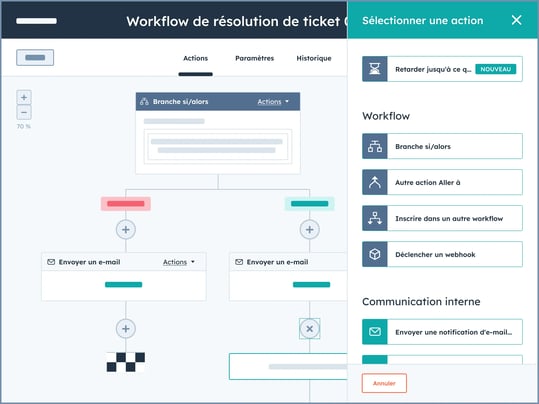
HubSpot customer service ticket resolution
01. After-sales service

Better after-sales service

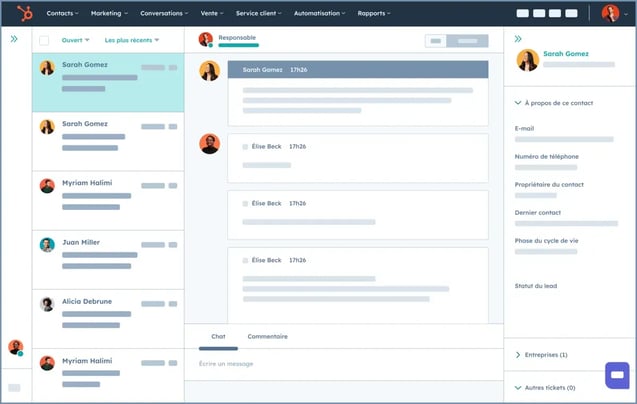
One of the most critical aspects of manufacturing is the quality of after-sales service. Our CRM delivers an automated, improved customer relationship through precise tracking of interaction history, warranties and required interventions. The result: fast, effective answers to customer requests, and higher satisfaction and loyalty.

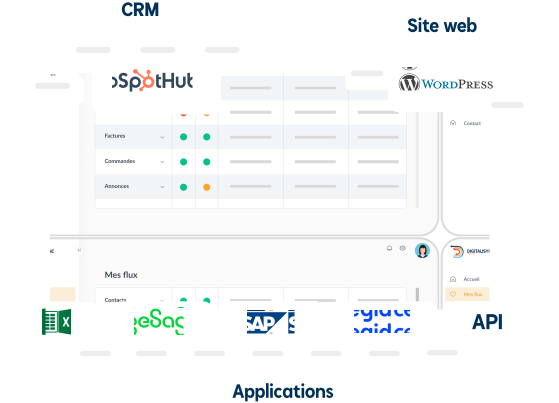
HubSpot integrations
02. Integrations

Integration with other systems

Our manufacturing CRM also shines in its ability to integrate with the other core systems of the business. Whether ERP, production management systems or data platforms, smooth integration centralises information, cuts data entry errors and speeds up processes.

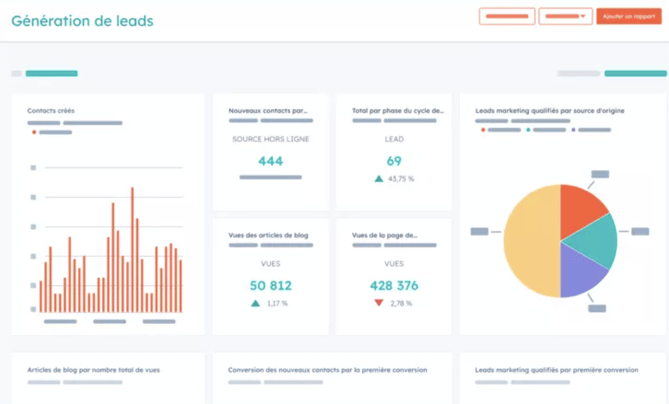
HubSpot marketing dashboard
03. Steering

Easier analysis and decision-making

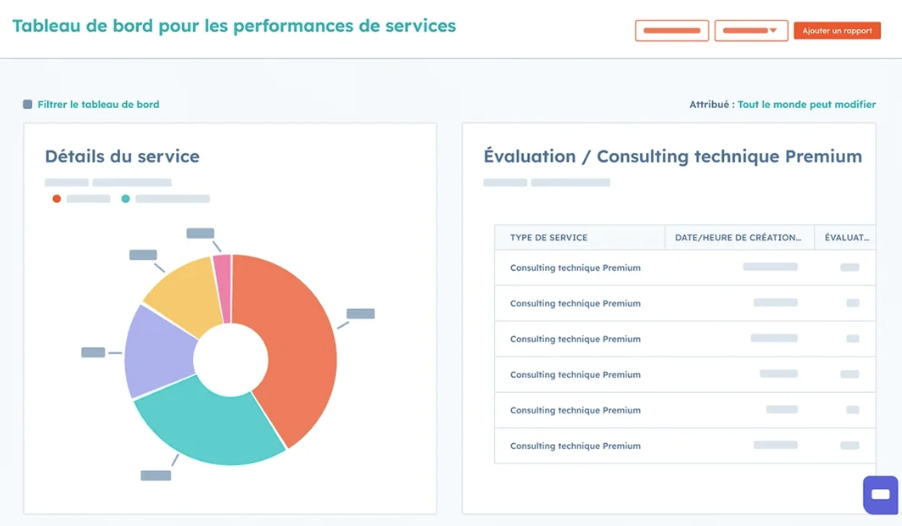
The rich, detailed data collected by the CRM gives decision-makers valuable insights. With features such as CRM data analysis and custom reports, our clients can easily spot trends, assess product performance and make informed strategic decisions. This in-depth analysis contributes directly to better sales and stronger business results.

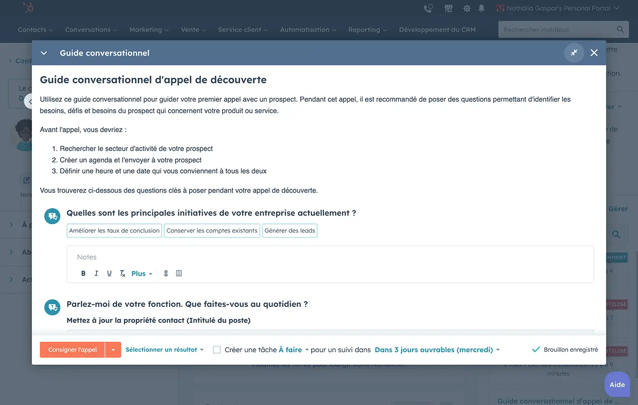
HubSpot conversion process guide
04. Sales process

Optimising the sales process

Optimising sales processes with a manufacturing CRM shortens sales cycles, improves forecast accuracy and raises the deal close rate. With accurate, up-to-date data on customers and the market, sales teams get relevant information that helps them target their efforts and personalise their interactions, which leads directly to more conversions.

HubSpot customer service inbox
05. Loyalty

Stronger customer loyalty

The CRM also drives better customer loyalty. With a complete, unified view of customer interactions, companies can solve problems proactively and anticipate customer needs before they become friction points. This improves the overall customer experience and raises the odds of repeat purchases and referrals, both crucial for higher revenue.

customer service reports
06. Advanced analytics

From raw data to decisions

Integrating advanced analytics features lets companies turn raw data into strategic insights. This information can help identify untapped market opportunities, optimise marketing efforts and adjust product strategies in real time. For example, predictive CRM analytics helps anticipate customer trends and buying behaviour, enabling targeted marketing actions with a higher return on investment.

Manufacturing CRM

What sets a manufacturing CRM apart from other CRMs?

Manufacturing needs a specialised approach to customer relationship management, because of its complexity and specific requirements.

Traditional CRMs may focus on simple interactions and routine transactions, but a Manufacturing CRM is designed to adapt to the nuances and sophistication of industrial processes: long sales cycles, project management, orders and production.

  Complex sales
  Project management
  Orders & production
  After-sales service

Your cycles are long. Your pipeline, under control.

Our experts are here to help you get the best out of HubSpot.

Industry expertise

Your processes are unique.
Your CRM adapts to them.

In a manufacturing context where customer relationship management keeps getting more complex, adopting a specialised CRM (Customer Relationship Management) is crucial. Copernic, a HubSpot Elite Partner, excels at implementing CRMs fitted to the specific needs of manufacturers.

A manufacturing CRM implemented by Copernic delivers customer data management that is efficient and centralised, essential for companies operating across several sites or needing precise tracking of their supply chain. Integrating the CRM with other core systems, such as ERP or unified data platforms, eases information flows and strengthens operational efficiency.

Customisation is at the heart of our CRM strategy. Every company is unique, so we configure the CRM to meet our clients' exact needs, whether for sales management, production tracking or technical support.

Our expertise in process optimisation and team training ensures your staff will be well prepared to use the CRM to the full.

Multi-site ERP integration Team training

Our services

Four levers.
From quote to delivery.

Copernic implements CRMs that focus on the critical aspects of manufacturing: complex sales, project management, orders and production, sector-specific features.

Managing complex sales

Sales cycles in manufacturing can be long and involve many stakeholders, from design to delivery. Our CRM provides in-depth CRM sales management , with features such as CRM order tracking and support for customer account management, to follow every detail and interaction throughout the sales cycle.

Integrating project management

In manufacturing, delivering products often resembles a complex project requiring careful coordination. Our CRMs include project management modules that help align every project stage, from planning to completion, for better synchronisation between teams and tighter control of deadlines and resources.

Managing orders and production

A key feature of our manufacturing CRMs is their ability to link order and production management directly to the CRM. This gives full visibility of the production process and the supply chain, helping manage stock better and cut delivery times.

Manufacturing-specific features

Our CRMs come with specific features built for industrial needs, such as the link between CRM and production, resource management and CRM integration, for a perfect fit with industrial processes. These features not only manage customer relationships effectively but also optimise internal operations and ensure regulatory compliance.

Brice Germain, Copernic junior partner, in a client workshop
Your ERP knows your customers.
So does your CRM.
Brice Germain · Junior partner, business and process expert

What clients say

Their sales are tracked.
Their teams, trained.

Clear, precise sales tracking

“Sales tracking is now clear and precise. We save a huge amount of time, both on customer management and internally when training new hires.”
J. FlahautSEDIPEC · Manufacturing

Training fitted to each person

“Bruno Granjon created an environment that made learning HubSpot easy, adapting his content to our individual needs.”
M. SyllaAtlas Copco Compressors · Manufacturing

A clear audit, a challenge met

“An efficient, clear and very well executed audit and report. Despite difficult conditions, the Copernic team rose to the challenge.”
M. GaillardAtlas Copco Compressors · Manufacturing

Scroll →

Reviews translated from French

Artificial intelligence

AI sums up the history.
Your sales reps follow up at the right time.

Manufacturing teams pile up quotes, exchanges, orders, service requests and meeting notes. AI can help put this information to work faster and focus sales reps on the accounts that really need their attention.

AI in marketing production
01

Sum up an account's history

Emails, meetings, quotes and service requests can be summarised to quickly recover the context of an account before a meeting or a follow-up.


02

Prepare quote follow-ups

AI can help draft follow-ups, meeting notes and tracking emails from the context available in the CRM, so quotes do not go unanswered.

03

Spot the accounts to re-engage

Analysing activity can help identify customers or distributors showing a long gap in exchanges or signals of a new need.

04

Anticipate customer needs

Predictive analytics can help anticipate customer trends and buying behaviour, to target sales and marketing actions.

HubSpot Elite Partner

Sales, sales admin, leadership.
The same data.

For 10+ years, Copernic has helped manufacturers structure complex sales in HubSpot: multi-site accounts, technical quotes, long cycles with several decision-makers.

We connect the CRM to your ERP so sales, sales administration and leadership work on the same data: accounts, items, orders and invoices.

After-sales service (requests, interventions, warranties) and the distributor network also have their place in the CRM, with dedicated pipelines and views.

The result: a CRM field teams actually use, and a reliable sales forecast.

HubSpot CRM implementation accreditation
HubSpot Elite partner
Solutions Partner Program
Onboarding Accreditation
HubSpot Onboarding Accreditation
HubSpot CRM Data Migration accreditation
CRM Data Migration
HubSpot Solutions Architecture Design accreditation
Solutions Architecture Design
Copernic in numbers

Complex sales.
Proven expertise.

We help manufacturers structure their complex sales, connect HubSpot to their ERP, track after-sales service and train their teams.

800+clients supported
1,200HubSpot hubs implemented
130HubSpot certifications
4HubSpot accreditations

Key takeaways

A quote followed up.
An order signed.

Implementing a manufacturing CRM with Copernic does not just change how a company manages its customers, it also lifts its growth prospects. Continuous process improvement and customer satisfaction lead to a sustained increase in revenue.

  • Manage long sales cycles with several decision-makers.
  • Track quotes, orders and multi-site accounts.
  • Connect HubSpot to the ERP and production tools.
  • Track after-sales service: requests, interventions, warranties.
  • Give the distributor network its place.
  • Steer sales with custom reports.

FAQ: manufacturing CRM

Why does a manufacturer need a CRM if it already has an ERP?

The ERP manages what is ordered, produced, delivered and invoiced. The CRM manages what happens before and around it: prospecting, opportunities, open quotes, distributor relationships, service requests. The two complement each other: once connected, they give sales reps a view of orders and leadership a revenue forecast based on the pipeline. See ERP and CRM: what are the differences (in French).

Is HubSpot suited to complex industrial sales (quotes, distributors, key accounts)?

Yes, if it is designed for it. HubSpot handles company hierarchies (group, subsidiaries, sites), several pipelines (direct deals, distributors, projects), quotes based on a product library and, depending on the edition, custom objects for installed equipment or maintenance contracts. Design matters more than the tool: define precisely what a deal, an account and a site are.

How do you connect HubSpot to the company's ERP?

Depending on the ERP, the connection uses an existing connector, Data Sync, middleware or a custom API integration. Before the technical side, decide which data flows and in which direction: accounts and contacts, items, orders, invoices, outstanding balances. For example, we did this with Odoo for Sprinter.

How long does it take to roll out a CRM in a manufacturing company?

The timeline depends on the number of sites, countries and teams, and above all on the ERP integrations. We start with an audit or scoping, then roll out in batches. Atlas Copco Compressors rated this first step as follows: “An efficient, clear and very well executed audit and report.” (review published on Copernic's HubSpot partner listing)

How do you get field sales reps and technical sales staff to adopt the CRM?

With a mobile app that works between two appointments, quick meeting notes and information that helps them (history, quotes, orders) rather than a control tool. Ongoing follow-up matters too. Kaeser Compresseurs noted: “Another plus point for the quarterly reviews with the whole team!” (review published on Copernic's HubSpot partner listing)

What does Copernic do for manufacturers?

Copernic, a HubSpot Elite Partner, scopes the project with your sales, marketing and IT leadership, designs the data model (accounts, sites, distributors, deals), configures HubSpot, connects it to the ERP and trains the teams. Copernic holds four HubSpot accreditations, including CRM implementation and Solutions Architecture Design.

Your sales go through distributors. So should your visibility.

Build HubSpot around your accounts, sites, distributors, quotes and orders to steer complex industrial sales and connect your teams to your ERP.